If your car’s steering feels a little off or your tires are wearing unevenly, it’s tempting to assume one service will take care of everything. But wheel alignment and tire rotation do different jobs. Choosing the right one can help protect your tires, improve the way your vehicle handles, and prevent a small concern from becoming a more expensive repair.
The difference: where the tires go versus how the wheels point
Tire rotation moves tires between positions
A tire rotation means moving the tires to different positions on your vehicle, such as from front to rear. The goal is to help them wear more evenly over time.
Tires can wear at different rates depending on their position, the vehicle’s drivetrain, driving habits, tire pressure, and suspension condition. Rotating them as recommended helps distribute that wear. It does not change the angles of the wheels or correct a steering problem.
Rotation patterns aren’t the same for every vehicle. The owner’s manual may specify a pattern, or explain that your tires shouldn’t be rotated, as can happen with some vehicles that use different tire sizes front and rear.
Wheel alignment adjusts suspension angles
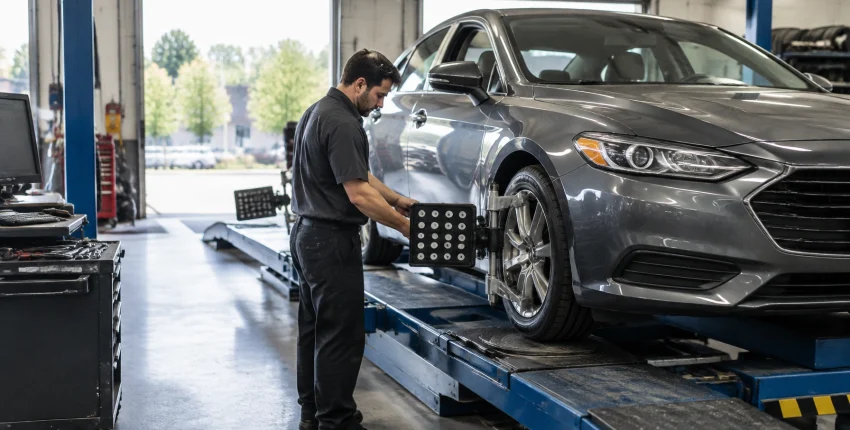
A wheel alignment is an adjustment to the angles of the wheels and related suspension settings, according to your vehicle manufacturer’s specifications. The goal is for the wheels to point and meet the road as intended.
Alignment doesn’t move tires between positions, and it doesn’t replace worn tires. It addresses how the vehicle’s wheels are positioned, which can affect steering, handling, and tire wear.
For a closer look at the services available, see Qwik Oil & Auto Care’s tire and alignment services and steering and suspension services.
Which service might your car need?
Signs a tire rotation may be due
A rotation is often part of scheduled maintenance, so check your owner’s manual for the recommended timing and any vehicle-specific instructions. You may also want to have your tires inspected if you notice that some are wearing faster than others.
Look for differences in tread wear across the set, especially between front and rear tires. Uneven wear can have more than one cause, though, so it’s best not to assume a rotation is the only answer. Incorrect tire pressure, worn suspension parts, or misalignment may also contribute.
If your vehicle vibrates, mention it when you book an inspection. Vibration can come from several issues, including tire balance or tire damage; rotation alone may not solve it.
Signs an alignment check may be worthwhile
Consider having the alignment checked if:
- Your vehicle pulls or drifts to one side on a reasonably straight road.
- The steering wheel sits off-center when you’re driving straight.
- You see unusual wear concentrated on the inner or outer edge of a tire.
- You’ve hit a significant pothole or curb and notice a change in handling.
- Steering feels different than usual or the vehicle no longer tracks as expected.
These symptoms can have multiple causes. A pull, for example, may relate to tire pressure, tire condition, brakes, or suspension components, not just alignment. A proper inspection helps identify what’s actually going on before you pay for a service that won’t address the cause.
Why one service doesn’t replace the other
Think of it this way: rotation changes which corner of the vehicle each tire occupies; alignment changes how the wheels are positioned. They’re complementary maintenance tasks, not substitutes.
Rotating tires won’t correct wheels that are pointing at the wrong angles. If an alignment issue is causing one edge of a tire to wear quickly, moving that tire to another position may only spread the problem around. The underlying cause remains.
Likewise, an alignment won’t undo uneven wear that has already developed because tires were left in one position too long. Alignment adjusts the vehicle; it can’t restore tread that’s already worn away. If a tire has significant or unsafe wear, it may need replacement.
That’s why a tire inspection can be helpful when you’re unsure. The tread pattern, steering feel, tire pressure, and condition of steering and suspension components all provide clues. A technician can explain whether the next step is rotation, alignment, another repair, or simply monitoring the tires.

How often should you rotate tires or check alignment?
Follow your owner’s manual first. Rotation schedules and eligible patterns vary by vehicle and tire setup, so a single mileage interval shouldn’t be treated as a rule for every car.
Alignment also isn’t necessarily a fixed-interval service for every vehicle. It’s worth checking when you notice symptoms, after a substantial impact, or when an inspection suggests a concern. If your manual gives a recommended inspection schedule, use that as your guide.
When you visit for tire service, ask whether the technician sees wear or handling signs that warrant an alignment check. That keeps the decision tied to your vehicle’s condition instead of treating either service as automatic.
For general tire-care guidance, you can also review the National Highway Traffic Safety Administration’s tire safety information and the U.S. Tire Manufacturers Association’s tire care essentials.
Why both matter for drivers in Prosper
Driving around Prosper means your tires encounter a mix of everyday road surfaces, turns, stops, and occasional bumps. A hard impact with a pothole or curb can affect steering or suspension components and may knock alignment out of specification. Routine tire wear, meanwhile, continues with normal driving.
That makes it useful to pay attention to changes rather than waiting for a small issue to become obvious. If your steering feels different after an impact, or the tread looks uneven during a quick check, an inspection can help you understand what your vehicle needs.
Proper maintenance is an investment in your tires and your peace of mind. Catching a wear pattern early may help you avoid replacing tires sooner than necessary, while addressing an alignment concern can help prevent continued uneven wear. It’s a practical way to save money and stress over the life of your vehicle.
Get the right tire service for your vehicle
If you’re weighing a wheel alignment in Prosper against a tire rotation, start with the symptom, and your owner’s manual. Qwik Oil & Auto Care is locally owned and operated, with ASE-certified technicians and tire services for all makes and models. Our team can inspect your tires and explain the options clearly.
Visit us at 113 N Coleman St, Prosper, TX 75078, or book your appointment online. You can also call 972-347-3115. We’re open Monday through Friday, 7:30 AM–5:30 PM, and closed on weekends.