
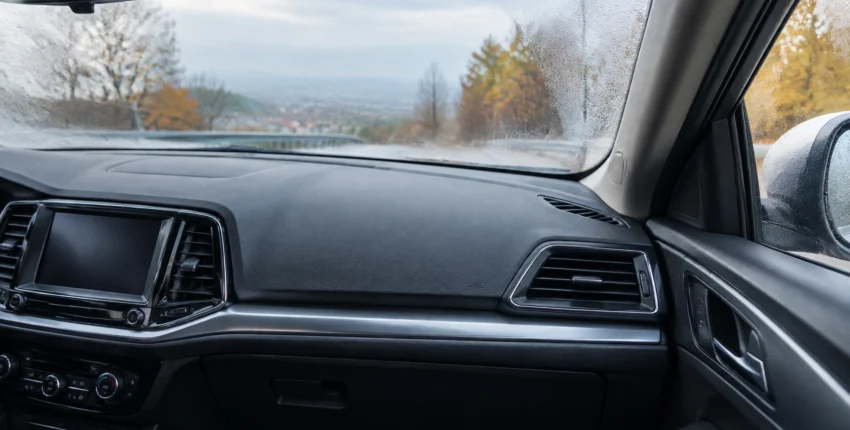
That first chilly October or November morning has a way of revealing problems your car’s heater kept quiet all summer. You turn up the temperature, wait for warm air, and get a cold breeze instead. It’s uncomfortable, but it can also become a safety issue if your defroster can’t keep the windshield clear.
Before assuming the heater needs a major repair, it helps to know how the system works and what clues to look for. A few simple observations can help you describe the problem to a technician and avoid guessing at the cause.
How your car’s heater makes warm air
In most conventional gas-powered cars, the heater uses warmth from the engine rather than creating heat on its own. Engine coolant absorbs heat as the engine runs, then carries it through a small radiator-like component behind the dashboard called the heater core. The blower fan pushes cabin air across the hot core and into the vents.
A temperature door, often called a blend door, controls how much air passes across the heater core. The blower moves the air, while other doors direct it toward the dashboard vents, floor, or windshield.
That means a heater can blow cold air for several different reasons. The engine might not be getting warm enough, hot coolant might not be circulating properly, or the system might not be moving or directing air as it should. Haynes’ overview of car heater problems explains the same basic relationship between the engine’s cooling system and cabin heat.
What to check first when the heater stops working
Start by noticing what the system is doing. Is there no airflow, weak airflow, or a steady stream of air that simply stays cold? That distinction helps narrow down the next steps.
1. Check the coolant level, only when the engine is cold
Low coolant is a common cause of poor cabin heat because there may not be enough coolant circulating through the heater core. A low level can also point to a leak, so topping it off without finding the reason it dropped may only delay a bigger problem.
If you check the reservoir, wait until the engine is completely cool and follow your owner’s manual. Never remove a radiator or coolant-system pressure cap while the engine is hot. Hot coolant can spray out under pressure and cause severe burns.
If the level is low, keeps dropping, or you see a puddle or warning light, arrange an inspection rather than repeatedly adding coolant. Driving with too little coolant can also put the engine at risk of overheating.
2. Watch how the engine warms up
A thermostat stuck open can allow coolant to circulate through the radiator too soon. The engine may take unusually long to reach its normal operating temperature, and the heater may provide only lukewarm air, especially on a short drive.
Keep an eye on the temperature gauge as you drive. If it stays unusually low after the vehicle should have warmed up, mention that along with the heater symptom. If the gauge climbs into the hot zone or a temperature warning appears, pull over safely and follow your owner’s manual. Do not continue driving an overheating vehicle or open its hot cooling system.
3. Notice whether the fan moves air
If the fan doesn’t run, or only works at certain speeds, the issue may be electrical rather than a lack of heat. Possible causes include a failed blower motor, a fuse or control problem, or a faulty blower resistor or regulator. When some fan speeds work but others do not, the resistor or regulator is one possibility a technician can test.
If air comes out but barely reaches the vents, a clogged cabin air filter may be restricting airflow. The filter doesn’t create heat, but a blocked one can make the heater and defroster feel weak. Your owner’s manual can show where the filter is and how often it should be replaced.
4. Try changing the temperature and airflow settings
If the engine is warm and the blower works, adjust the temperature from cold to hot and switch between vent, floor, and defrost settings. If the air temperature never changes, or one side of the cabin is warm while the other stays cold, a blend door or its actuator may be stuck, damaged, or out of calibration.
Clicking or tapping sounds behind the dashboard when you change settings can be another useful clue. It doesn’t confirm a failed actuator, but it’s worth mentioning when you describe the problem.

5. Watch for signs of a heater-core problem
A blocked heater core can restrict hot coolant flow and leave the cabin with little or inconsistent heat. A leaking core may leave more obvious clues:
- A sweet or fruity smell inside the cabin
- Persistent fogging on the inside of the windshield
- Damp carpet, often near the passenger footwell
- Coolant loss without an obvious puddle beneath the car
These signs don’t prove the heater core is at fault, but they deserve prompt attention. The core is tucked behind the dashboard, so confirming a leak or blockage often takes a proper inspection. Avoid reaching into the engine bay to handle hot hoses or trying to open a warm cooling system yourself.
A working heater is part of safe visibility
When the windshield is fogged or frosted, the heater and defroster aren’t just about comfort. They help clear your view of the road. If the defroster can’t keep the glass clear, don’t drive until you have adequate visibility. Clear the windshield and other windows, and pull over somewhere safe if they fog up while you’re driving.
Use your vehicle’s defrost settings as described in its owner’s manual. The right combination of heat, fan speed, and air conditioning can vary by vehicle and conditions. For more guidance, see this windshield defogging information in a Kia owner’s manual.
Get the cause diagnosed before it becomes a bigger repair
When you’re trying to identify a heater problem, think in terms of airflow versus temperature. No air or weak airflow points toward the blower, filter, or controls. Normal airflow that stays cold calls for a closer look at engine temperature, coolant level and circulation, and the blend door. A sweet smell, fogged glass, damp carpet, or recurring coolant loss should be checked promptly.
For drivers looking for auto repair in Prosper, TX, Qwik Oil & Auto Care provides heating and cooling system repair. Our ASE-certified technicians can inspect the system, explain what they find, and discuss the repair and pricing transparently before work begins. Repairs are backed by nationwide warranty coverage, and flexible financing is available through Synchrony and Acima.
If your heater has stopped keeping you comfortable, or your defroster can’t clear the windshield, schedule a visit with a mechanic in Prosper, TX. You can book online and have the issue checked before the next cold morning catches you off guard.