
Your car starts fine through the summer, so the battery must be healthy. Right? Not necessarily. A battery can lose strength little by little in hot weather and still start your vehicle on warm mornings. Then the first cool morning arrives, the engine turns over slowly, and you’re left wondering what happened.
The cold may be when you notice the problem, but months of heat may have helped create it. In Prosper, October is a good time to check your battery before cooler mornings put a worn one to the test.
How summer heat weakens a car battery
Most starting batteries use a chemical reaction to provide the electrical power needed to start your vehicle. Under the hood, high temperatures can speed up chemical reactions and accelerate wear inside a lead-acid battery. Over time, that can reduce its ability to hold a charge and deliver enough power for a reliable start.
Heat can also contribute to water loss in some battery designs. If electrolyte levels fall in a serviceable battery, internal parts may be exposed and damaged. Modern maintenance-free batteries are designed to limit water loss, but they aren’t immune to heat, age, or wear.
The trouble is often gradual. Your car may start normally even as the battery loses capacity. Like a phone that seems fine until its charge suddenly drops faster than expected, a weakening battery can leave less reserve than you think.
Why the first cold snap reveals the problem
Cold weather affects both sides of the starting process: the battery has less available power, while the engine can need more effort to turn over. Cooler temperatures slow the battery’s chemical reactions. At the same time, engine oil thickens, adding resistance as the starter turns the engine.
A healthy battery may handle that extra demand without a fuss. A battery already weakened by heat, age, or internal wear may not have enough reserve. That’s why the first cold snap can seem like the cause, even when the battery has been deteriorating for months.
A battery’s age matters, too. If yours is three years old or more, it’s worth having its condition checked, especially if you notice any changes in starting or electrical performance. Age alone doesn’t mean it needs replacement, but it’s a sensible reason not to guess.
Warning signs your battery may be losing strength
Some battery problems are obvious; others show up as small changes you might dismiss. Watch for:
- Slow cranking: The engine turns over more slowly than usual when you start the car.
- Dim or flickering lights: Headlights or interior lights seem unusually dim, particularly during startup.
- Electrical quirks: Accessories behave inconsistently, or electronics reset or act unpredictably.
- Corrosion around the terminals: White or bluish deposits can interfere with electrical connections. Corrosion doesn’t prove the battery itself has failed, but it should be checked.
- Repeated jump-starts: Needing a jump more than once is a reason to find out why the battery isn’t holding enough charge.
- A battery warning light: This can point to a charging-system problem, not just a worn-out battery. The alternator, wiring, and connections may need inspection as well.
A swollen or cracked battery case, leaking fluid, steam, or a strong sulfur-like odor calls for prompt attention. Don’t handle a damaged battery casually; have it inspected safely.

Why a voltage check alone may not be enough
A quick voltage reading can be useful, but it doesn’t always show how well a battery will perform when the starter draws power. A battery might show a reasonable voltage while the car is off and still struggle under load.
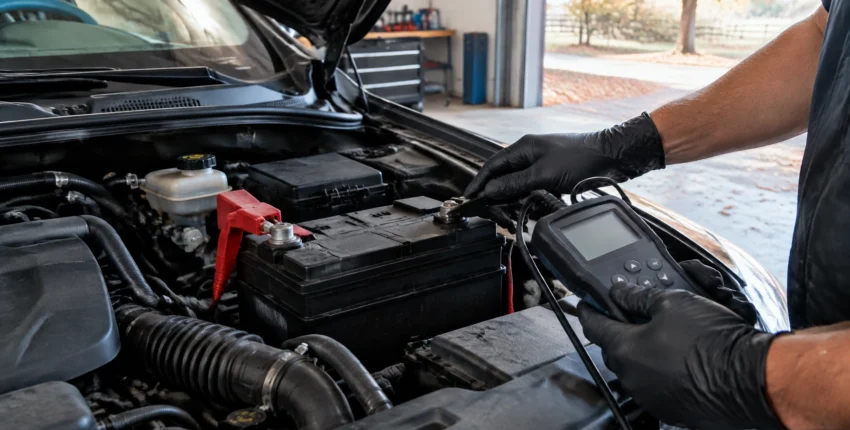
A professional battery and charging-system check can give you a clearer picture. Depending on the vehicle and battery condition, testing may include checking the battery’s starting capacity, connections, and charging performance. A load or conductance test helps assess whether the battery can deliver adequate power, not just whether it has a charge at that moment.
It’s also important to check the charging system. If the alternator isn’t charging correctly, or a connection is poor, replacing the battery alone may not solve the underlying issue. A proper test helps separate a weak battery from a charging or electrical problem, so you’re not replacing parts based on a guess.
For a broader look at what testing can reveal, read our guide to professional car diagnostic service.
Replace it or keep driving?
A three-year-old battery isn’t automatically due for replacement. If it passes a proper test, holds a charge, and starts the vehicle reliably, you may be able to keep driving and monitor it. Ask your technician what the test results mean for your vehicle and driving habits.
Replacement is more likely to make sense if the battery fails a properly performed test, won’t hold a charge, or shows visible physical damage. If you do need a new one, choosing the correct type and size for your vehicle matters. The battery should meet the vehicle manufacturer’s requirements, including the specifications for its starting system.
Don’t overlook the charging system during a replacement. Checking it at the same time can help identify a charging fault or connection issue that could affect the new battery. It’s a small step that can help save money and stress later.
Get ahead of the cold with a battery check
If your car has been slower to start, its lights are dimming, or its battery is three years old or more, don’t wait for a no-start to find out where things stand. A battery and charging-system test can help you make an informed choice: keep driving, monitor the battery, or replace it before it lets you down.
At Qwik Oil & Auto Care, our ASE-certified technicians provide honest, transparent service and competitive pricing for drivers in Prosper, TX. If a repair is needed, nationwide warranty coverage and flexible financing through Synchrony and Acima are available. You can book your appointment online or visit us at 113 N Coleman St, Prosper, TX 75078. A timely check is a practical investment in dependable starts when the weather turns cool.