
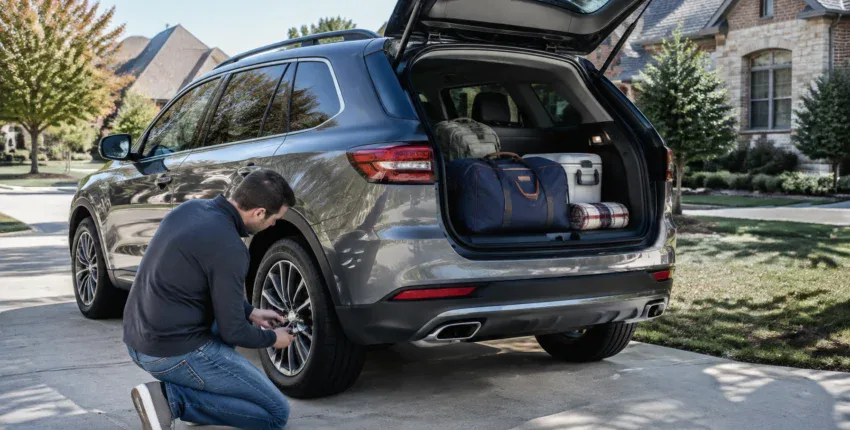
Holiday travel should be about catching up with family, enjoying a change of scenery, and making good memories: not waiting on the shoulder of a highway with the hood up.
If you’re leaving Prosper, TX, for a Thanksgiving visit or a late-fall getaway, your vehicle deserves a little attention before the miles add up. A short trip to the grocery store can hide a weak battery, worn tires, or a fluid leak. Those problems become much harder to ignore when you’re several hours from home with a full vehicle and a packed schedule.
Use these seven checks as your pre-trip checklist. If anything looks questionable, schedule a professional inspection with Qwik Oil & Auto Care before the highway finds the problem for you.
1. Check the essential fluids
Fluids are the working essentials of your vehicle. They lubricate moving parts, control heat, help you stop, and keep your windshield clear. Before a holiday road trip, check the following with your vehicle parked on level ground.
Engine oil
Check the oil level according to your owner’s manual, usually with the engine off and cooled down for several minutes. If the level is low, the oil looks unusually dirty, or you are approaching your vehicle’s recommended service interval, schedule an oil change before leaving.
Fresh oil helps protect the engine during long periods of highway driving. It is a relatively small maintenance investment compared with repairing an engine damaged by low or neglected oil.
Coolant
Coolant protects your engine from overheating and helps regulate temperature during both warm afternoons and sudden cold snaps. Check the overflow reservoir only when the engine is cool, and make sure the level falls between the marked lines.
Look around the reservoir, radiator area, and hoses for wet spots or signs of a leak. Never remove a radiator cap from a hot engine.
Brake fluid
Low or contaminated brake fluid can affect pedal feel and braking performance. If the level is below the recommended mark, or the fluid appears unusually dark, have the braking system inspected. A low level may also indicate worn brake components or a leak.
Windshield washer fluid
Fill the washer reservoir before you leave. Road spray, dust, and insects can quickly reduce visibility, especially on busy highways. For late fall travel, choose washer fluid rated for cooler temperatures.
2. Inspect belts and hoses
Belts and hoses may not receive much attention during everyday driving, but they play a major role in keeping your vehicle running. A failed serpentine belt can disable systems such as the alternator, water pump, or air conditioning, depending on the vehicle. A damaged coolant hose can lead to overheating.
With the engine off, look for:
- Cracks, fraying, glazing, or loose sections on visible belts
- Bulges, soft spots, or cracking on coolant hoses
- Wet spots or dried residue near hose connections
- Unusual squealing or chirping noises when the engine runs
You do not need to diagnose every component yourself. If something looks damaged or sounds different, an auto repair shop in Prosper, TX, can inspect the system and explain what needs attention before your trip.
3. Check tire pressure, tread, and the spare
Your tires are the only parts of your vehicle touching the road. They deserve more than a quick glance before a long drive.
Set the correct pressure
Check tire pressure when the tires are cold: before driving for the day or several hours after the vehicle has been parked. Use the recommended PSI on the driver’s door-jamb label or in the owner’s manual, not the maximum number printed on the tire sidewall.
Cooler fall mornings can lower tire pressure. As a general rule, pressure changes by about 1 PSI for every 10-degree Fahrenheit change in temperature. That small difference can matter if a tire was already close to the low-pressure threshold.
Check all four tires and the spare. If one tire is repeatedly losing air, do not simply keep adding air. A slow puncture, damaged valve stem, wheel issue, or other leak may need professional attention.
Inspect tread and sidewalls
Look for uneven wear, bald areas, cuts, cracks, bulges, or objects stuck in the tread. Uneven wear may point to an alignment, balance, suspension, or inflation problem.
If you need a tire inspection, rotation, balance, flat repair, or wheel alignment, your local tire shop in Prosper, TX can help you prepare for highway travel with greater confidence.
4. Pay attention to your brakes
Holiday traffic can mean sudden stops, heavy congestion, and more time spent braking. Your brakes should respond smoothly and predictably.
During a short, safe test drive, notice whether your vehicle:
- Pulls to one side while braking
- Vibrates through the pedal or steering wheel
- Takes longer than usual to stop
- Makes squealing, scraping, or grinding noises
- Has a soft, spongy, or unusually low pedal
These symptoms can indicate worn brake pads, damaged rotors, low brake fluid, a sticking caliper, or another braking-system concern. Do not wait until you reach your destination to investigate a warning sign.
A professional brake inspection can identify wear early, when a straightforward repair may prevent more extensive damage. For drivers in Prosper, regular brake care is an investment in both safety and peace of mind.
5. Test the battery before the first cold snap
A battery often fails at the most inconvenient time: early in the morning, away from home, or when everyone is ready to leave.
Here is the part many Texas drivers do not realize: cold weather often exposes battery damage caused by months of summer heat. High temperatures can weaken internal battery components and accelerate fluid loss. The first cold snap may simply reveal that the battery no longer has enough reserve power to start the engine reliably.
Before your trip, look for:
- Slow cranking when you start the vehicle
- Dimming interior or exterior lights
- Corrosion around the terminals
- A battery warning light
- A battery that is several years old
- Electrical accessories that behave inconsistently
A battery test can provide a clearer picture than appearance alone. While checking the battery, have the charging system inspected if your vehicle has experienced starting problems.
6. Improve wipers and visibility
Fall travel brings earlier sunsets, changing weather, and potentially wet roads. You need to see clearly, and other drivers need to see you.
Test your:
- Low- and high-beam headlights
- Brake lights and tail lights
- Turn signals and hazard flashers
- Reverse lights
- Front and rear windshield wipers
- Windshield washer nozzles
- Front and rear defrosters
Replace wiper blades if they streak, skip, chatter, or leave sections of glass untouched. Clean the inside and outside of the windshield, along with the mirrors and headlights. A dirty windshield can create glare at night and make rain much harder to manage.
If the defroster is slow or your climate-control system is not working properly, have it checked before travel. Visibility is not the place to take chances.
7. Pack a roadside emergency kit
Even a well-maintained vehicle can encounter a flat tire, traffic delay, or unexpected weather. A basic emergency kit can make a stressful situation safer and more manageable.
Pack these essentials:
- Flashlight with spare batteries
- Jumper cables or a charged jump starter
- Tire pressure gauge and portable inflator
- Jack, lug wrench, and wheel-lock key
- First-aid kit
- Reflective warning triangles or roadside flares
- Work gloves
- Phone charger or power bank
- Bottled water and nonperishable snacks
- Blankets or extra layers
- Basic tools
- Registration, insurance information, and roadside assistance details
Before loading the car, secure loose luggage so it cannot become a projectile during sudden braking. Keep heavy items low, avoid blocking your rear view, and make sure every passenger has a properly fitted seat belt.
A pre-trip inspection can prevent a holiday breakdown

You can check many basic items at home, but a professional inspection can uncover problems that are easy to miss. At Qwik Oil & Auto Care, our ASE-certified technicians inspect vehicles of all makes and models, from family SUVs and daily drivers to trucks and exotics.
A pre-trip visit may include checking your:
- Fluids and filters
- Battery and charging system
- Belts and hoses
- Tires, tread, pressure, and TPMS
- Brakes and brake fluid
- Steering and suspension
- Lights, wipers, and defrosters
- Warning lights and diagnostic systems
We also help local businesses keep work vehicles dependable through proactive fleet vehicle maintenance. Whether you are preparing one family car or several company vehicles for holiday schedules, preventive service can reduce downtime and unexpected repair costs.
The goal is not to sell you work your vehicle does not need. It is to identify concerns, explain your options clearly, and help you make an informed decision before a small issue becomes a roadside emergency.
Get road-trip ready before you leave Prosper
A holiday road trip is a much better experience when you know your vehicle is ready for the distance. Check the fluids, belts, hoses, tires, brakes, battery, visibility equipment, and emergency supplies several days before departure. That gives you time to address problems without disrupting your travel plans.
If you want an expert set of eyes on your vehicle, book an appointment online with Qwik Oil & Auto Care in Prosper, TX. A pre-trip inspection now can help you save money, reduce stress, and spend more of your holiday enjoying the road: not waiting beside it.