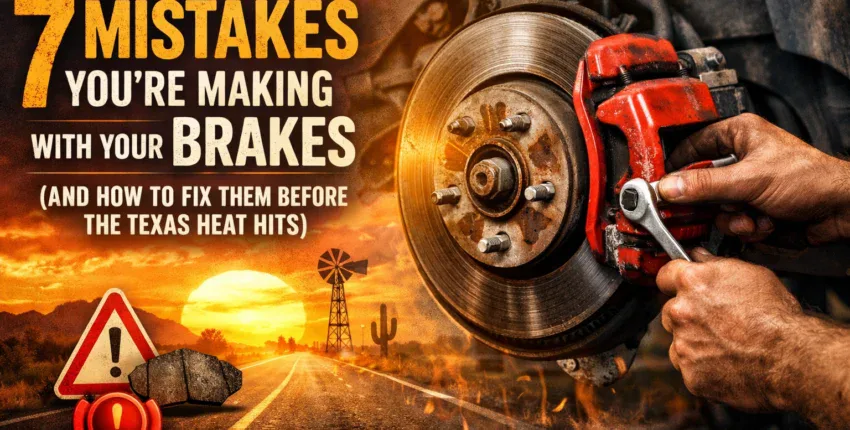
As the calendar turns and the Texas sun begins to flex its muscles, drivers in Prosper, TX, know that the heat isn’t just an inconvenience: it’s a mechanical adversary. While most of us think about our air conditioning or our coolant levels, there is one critical system that bears the brunt of the heat every time you hit the stop-and-go traffic on the Dallas North Tollway: your brakes.
Your braking system relies on friction to stop your vehicle. Friction creates heat. Now, add a 100-degree Texas afternoon to the mix, and your brake components can reach temperatures that would make an oven look like a refrigerator. If you are making common maintenance mistakes, you aren’t just risking a squeak; you’re risking a total system failure when you need it most.
At Qwik Oil & Auto Care, we see these mistakes every day. To keep your family safe and your wallet full, we’ve outlined the seven most common brake mistakes and how to fix them before the summer swelter arrives.
1. Ignoring the “Squeak of Death”
The most common mistake drivers make is treating a squealing brake like a minor annoyance that can wait until the next oil change. That high-pitched noise is actually a built-in safety feature called a wear indicator. It’s a small metal tab designed to scrape against the rotor when your pads have worn down to a critical level.
The Danger: If you ignore the squeal, you will eventually hear a “grind.” That grinding sound is metal-on-metal contact. At this point, you aren’t just replacing pads; you are destroying your rotors and potentially causing your brake calipers to seize.
The Fix: As soon as you hear a consistent chirp or squeal, bring your vehicle in for a brake service. Addressing it early turns a major repair into a simple maintenance task.
2. Replacing Pads but Neglecting the Rotors
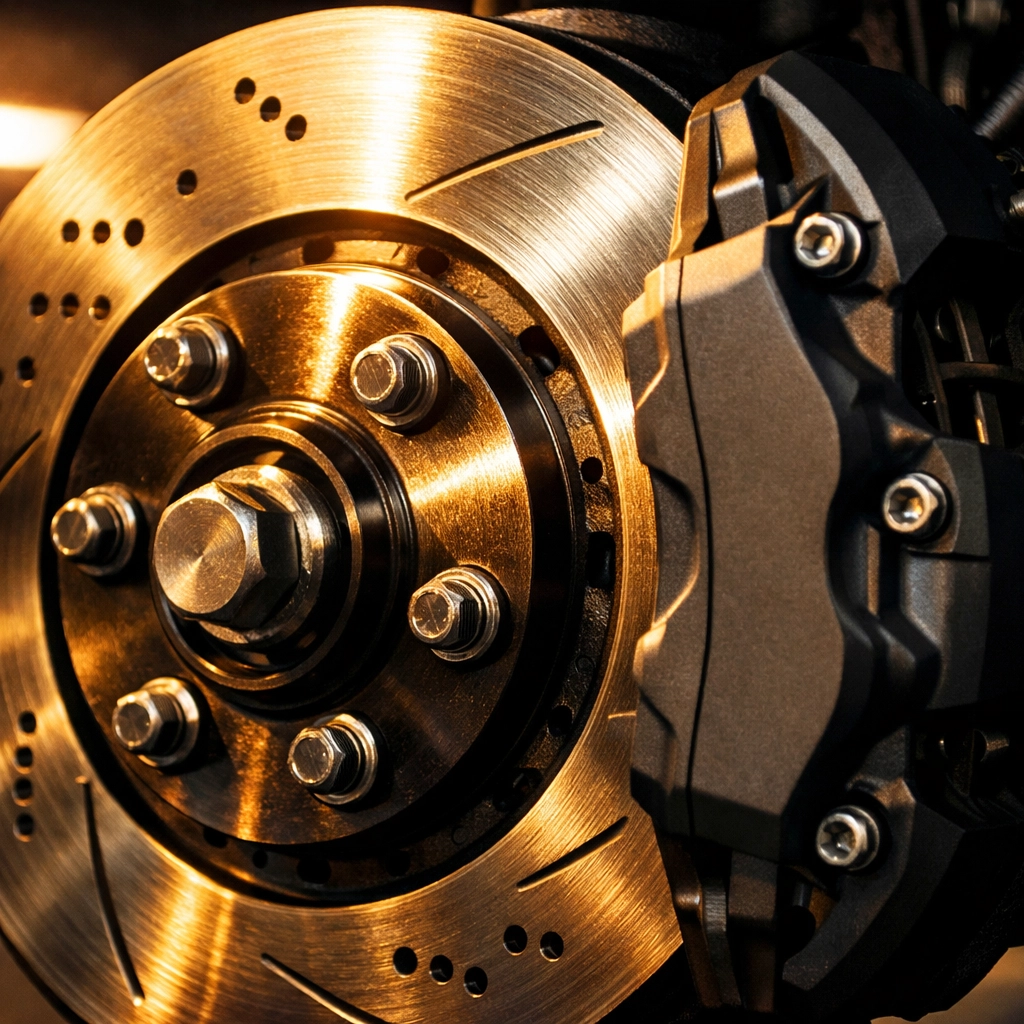
Many DIY enthusiasts and budget shops try to save money by “slapping” new pads onto old rotors without a second thought. This is a recipe for disaster. Rotors: the metal discs your pads grip: develop lips, grooves, and heat spots over time.
The Danger: Putting smooth new pads on a warped or grooved rotor means the pad won’t make full contact with the surface. This reduces your stopping power significantly. Furthermore, the old deposits on the rotor can contaminate your new pads, causing them to wear out prematurely.
The Fix: Always have your rotors measured and inspected. If they are thick enough, they should be resurfaced (machined) to create a fresh “bite” for the new pads. If they are below the manufacturer’s thickness specifications, they must be replaced.
3. The “Old Fluid” Trap
Did you know brake fluid is hygroscopic? That’s a fancy way of saying it acts like a sponge for moisture. Over time, moisture seeps into your brake lines through microscopic pores in the hoses.
The Danger: In the Texas heat, moisture in your brake fluid is a silent killer. Water has a much lower boiling point than brake fluid. Under heavy braking in high temperatures, that water can turn into steam. Since steam is compressible and fluid is not, your brake pedal might go straight to the floor: a terrifying phenomenon known as “brake fade.”
The Fix: Check your owner’s manual, but generally, a brake fluid flush is recommended every two years. At Qwik Oil & Auto Care, we check your fluid clarity and moisture content during our diagnostics and inspections.
4. Hanging Calipers by the Hose
If you’ve ever tried to change your own brakes, you might have been tempted to let the heavy metal caliper dangle by the rubber brake hose while you swapped the pads.
The Danger: This puts immense stress on the internal structure of the brake line. It can cause the hose to collapse internally or develop a weak spot that eventually ruptures under the high pressure of an emergency stop. It is a critical safety mistake that can lead to an irreversible loss of braking pressure.
The Fix: Always support the caliper with a “S” hook or a piece of wire to the suspension. If you aren’t comfortable with the mechanical intricacies of your braking system, leave it to our ASE-certified technicians who have the specialized tools to do the job right.
5. Forgetting to Lubricate Guide Pins
Brakes are a moving system. When you press the pedal, the caliper must slide smoothly to apply pressure. This movement happens on small metal “guide pins.”
The Danger: Dirt, road salt, and old grease can cause these pins to stick. If the pins seize, your brake pads will apply pressure unevenly. You’ll notice one pad wearing down to the metal while the other looks brand new. Even worse, a stuck pin can cause your brakes to “drag,” generating massive amounts of heat that can warp your rotors and kill your fuel economy.
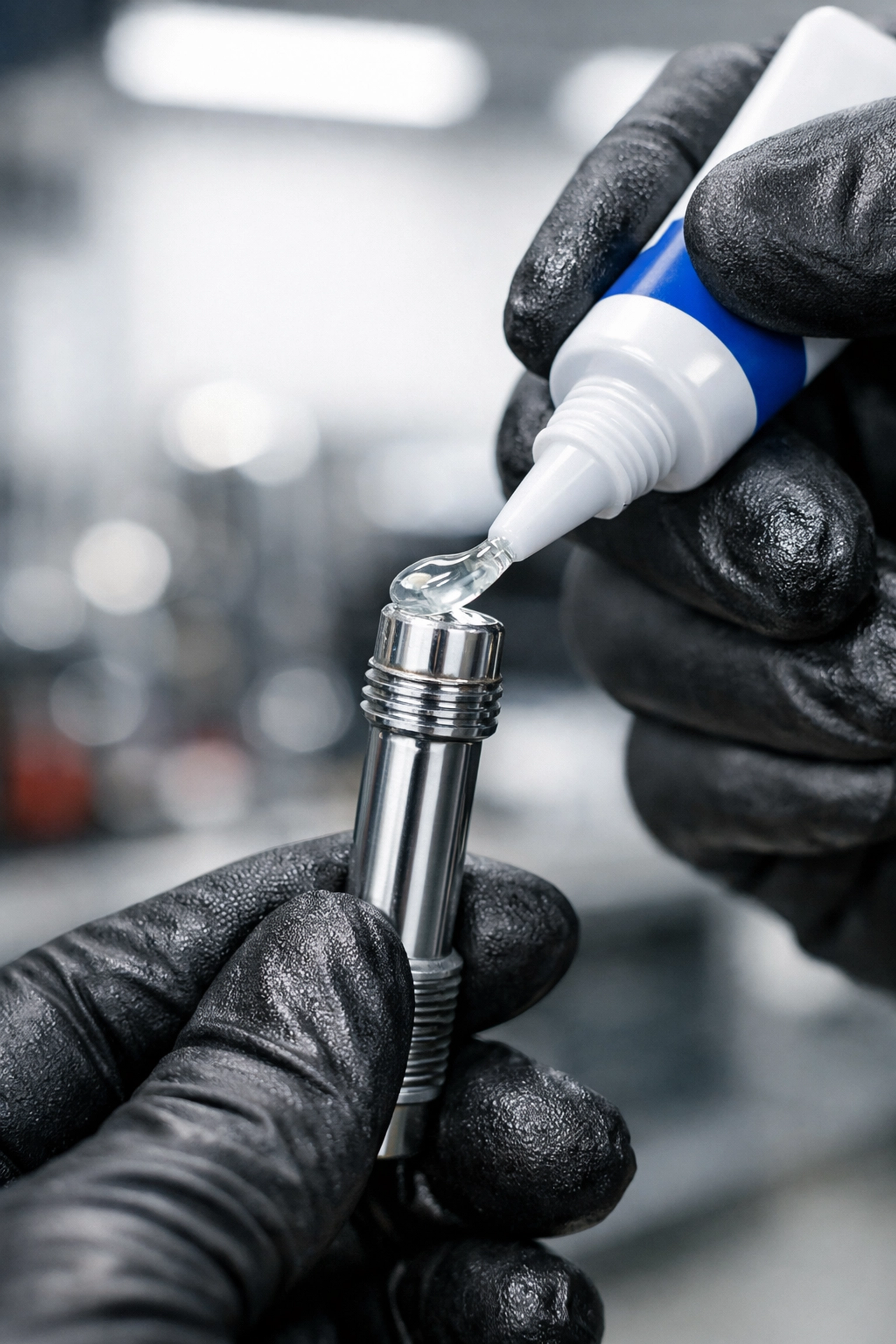
The Fix: Every time your brakes are serviced, the guide pins should be removed, cleaned with solvent, and re-lubricated with high-temperature brake grease.
6. Buying the Cheapest Parts Available
We get it: auto repair can be an unexpected expense. However, the “economy” brake pads found at big-box retailers are often made of inferior friction materials that cannot handle the thermal stress of a North Texas summer.
The Danger: Cheap pads often use high amounts of metallic fillers that are noisy, produce massive amounts of black dust, and wear out in half the time of quality ceramic or semi-metallic pads. In emergency situations, low-quality pads can literally crumble under extreme heat.
The Fix: View your brakes as an investment, not an expense. We use high-quality components that meet or exceed OEM specifications, ensuring your car stops exactly when it needs to. We also offer financing options to help you get the safety you need without the immediate financial stress.
7. Skipping Regular Inspections
Modern cars are incredibly quiet and well-insulated. You might not feel a slight vibration or hear a faint rub until the damage is already done. Waiting for a warning light on your dashboard is often waiting too long.
The Danger: Small issues, like a torn dust boot or a tiny leak in a brake line, are easy to fix if caught early. If left alone, they lead to complete component failure. In the high-speed environment of North Texas highways, you don’t want your first “inspection” to happen when you’re trying to avoid a collision.
The Fix: Make a general maintenance inspection part of your routine. Every time we perform an oil change at Qwik Oil & Auto Care, we keep an eye on your safety systems.

Why the Prosper Heat Changes the Game
In cooler climates, you might get away with slightly worn brakes for a few months. In Prosper, the heat accelerates every chemical and mechanical process in your car.
When the asphalt reaches 140 degrees, your tires are hot, your engine is hot, and your brakes have no way to dissipate their own heat effectively. This leads to thermal fatigue. Your rotors can develop “heat checks”: small cracks that can eventually lead to the rotor shattering. By addressing your brake health now, you are ensuring that your vehicle is prepared for the most demanding season of the year.
The Qwik Oil & Auto Care Difference
When you search for “brake repair near me” in Prosper, TX, you want more than just a quick fix. You want peace of mind.
At Qwik Oil & Auto Care, we pride ourselves on:
- ASE-Certified Technicians: Our team is trained to handle complex braking systems, from traditional setups to modern electronic parking brakes and ABS modules.
- Transparent Pricing: No “hidden fees” or surprise additions. We explain exactly what your car needs and why.
- Local Expertise: We live and work in Prosper. We know the driving conditions you face every day.
- Quality Parts: We only install components we would trust on our own family vehicles.
Don’t Wait Until It’s Too Late
Brake maintenance is the ultimate “ounce of prevention” in the automotive world. A simple pad replacement is affordable and quick; a full system overhaul after a failure is expensive and dangerous.
Before the Texas heat hits its peak, give your car the attention it deserves. Whether you’ve noticed a soft pedal, a strange noise, or it’s just been a while since your last check-up, we are here to help.
Ready to ensure your vehicle is road-ready?
Schedule your brake inspection at Qwik Oil & Auto Care today! Or stop by our shop in Prosper, TX, to experience the friendly, professional service that keeps our community moving safely. 🚗✨